Identifying Red Flags to Avoid Financial Loss on Dating Apps

Protecting yourself from financial loss on dating apps involves recognizing key red flags such as requests for money, elaborate stories, and pressure tactics from unknown profiles, ensuring a safer online experience.
Navigating the world of online dating can be exhilarating, offering connections and new possibilities. However, it’s crucial to approach these platforms with a vigilant mindset, particularly when it comes to dating app financial scams. Understanding how to identify red flags is your first line of defense against potential financial loss and heartache.
Understanding the landscape of dating app scams
The digital age has revolutionized how we meet people, but it has also opened new avenues for malicious actors. Dating apps, with their promise of romance and connection, can unfortunately become hunting grounds for scammers. These individuals often prey on emotional vulnerabilities, meticulously crafting personas and narratives designed to elicit trust before making their financial demands. It’s not just about losing money; it’s about the emotional toll that comes with betrayal and manipulation.
Scammers operate with various tactics, constantly evolving their methods to bypass security measures and deceive unsuspecting users. They invest time in building rapport, making their targets feel special and loved, before introducing a crisis that requires financial assistance. Recognizing these patterns is essential for anyone using dating applications today.
Common scammer profiles and tactics
Scammers typically create highly appealing, yet often generic, profiles. They might claim to be in high-earning professions that require frequent travel, explaining their inability to meet in person. Their stories are often elaborate and designed to evoke sympathy or admiration. They might initiate contact quickly and express intense affection within a very short period, a tactic known as ‘love bombing’.
- Exaggerated profiles: Impeccable photos, often stock images or stolen from others, and impressive but vague job titles.
- Rapid emotional attachment: Expressing deep feelings and commitment unusually fast, often within days or weeks.
- Reluctance to meet in person: Always having an excuse for why they cannot meet, often related to their supposed job or location.
- Shifting communication: Quickly trying to move conversations off the dating app to private messaging platforms like WhatsApp or email, where their activities are less monitored.
These tactics are carefully orchestrated to build a false sense of intimacy and urgency, making it harder for the victim to question their motives when the financial request eventually comes. The emotional investment makes the eventual ask seem like a reasonable extension of the relationship.
In conclusion, the initial phase of any dating app interaction is critical. Be wary of profiles that seem too good to be true and individuals who rush emotional intimacy. These are often the first indicators that you might be dealing with a scammer rather than a genuine romantic interest.
First red flags: profile inconsistencies and communication patterns
One of the earliest indicators of a potential scam is a profile that doesn’t quite add up. While everyone wants to present their best self online, scammers often leave a trail of inconsistencies that, upon closer inspection, can reveal their true intentions. Paying attention to these details can save you significant trouble down the line.
Beyond the profile, their communication style can also be a major giveaway. Scammers often use generic language, poor grammar, or repetitive phrases, suggesting they might be using scripts or operating from non-English-speaking regions. They might also avoid direct questions about their life, providing vague or evasive answers.
What to look for in a suspicious profile
A scammer’s profile often has tell-tale signs. High-quality, professional photos that look like they belong in a magazine, or conversely, very few photos, can be suspicious. They might have very little information in their bio, or the information provided might be overly generic and lack specific details that would make them a unique individual. It’s also common for their age, location, or profession to seem slightly off or too perfect.
- Professional or stock photos: Images that appear too polished or are easily found with a reverse image search.
- Sparse or generic bios: Limited personal details, often filled with clichés about love and life.
- Inconsistent information: Details that don’t align, such as claiming to be from one city but having an accent from another (if you speak on the phone).
When you encounter such a profile, it’s wise to proceed with extreme caution. A genuine person will usually have a more natural-looking profile with a variety of photos and a bio that reflects their personality and interests.
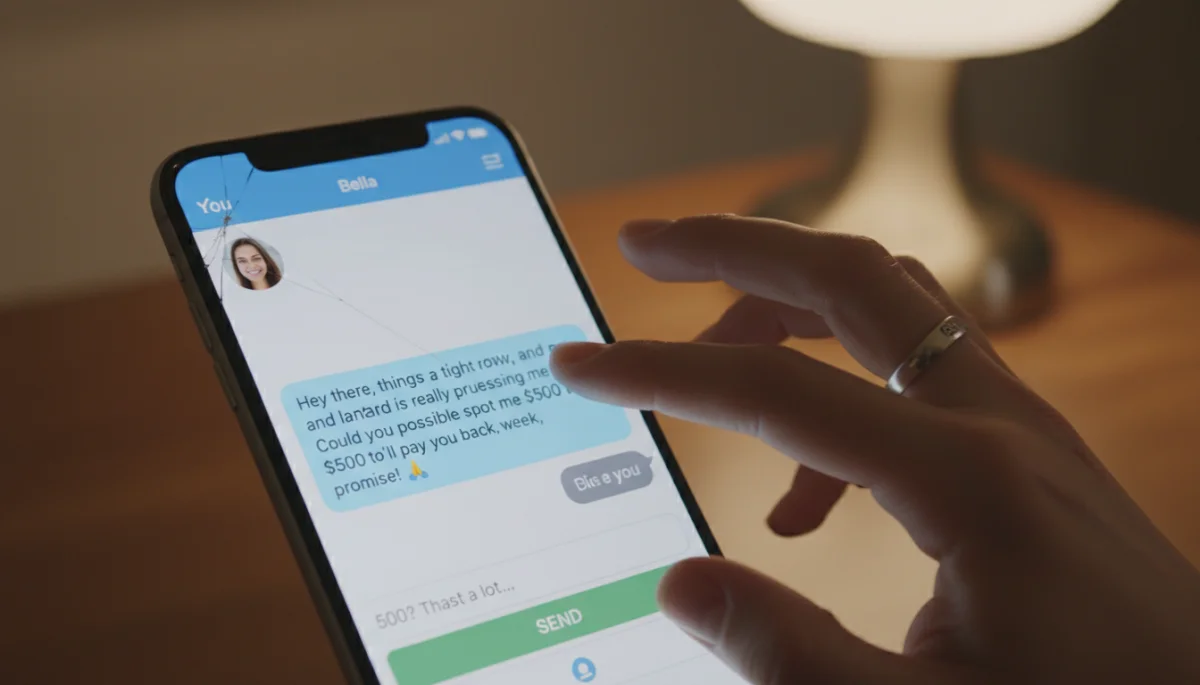
Furthermore, observe their communication patterns. Do they respond to your specific questions, or do they pivot to pre-written responses? Do they quickly try to move the conversation off the dating app to another platform? These are all subtle yet significant indicators that something might be amiss. A legitimate connection will typically respect your boundaries and communicate openly within the app’s established channels for a reasonable period.
In summary, scrutinizing profile details and being attuned to unusual communication patterns are critical steps in identifying potential financial scams on dating apps. Trust your instincts if something feels off.
The money request: the ultimate red flag
The most unequivocal sign of a dating app scam is a direct or indirect request for money. This is the point where the scammer’s true intentions become clear. No matter how convincing their story, how dire their situation, or how much emotional investment you’ve made, a request for financial assistance should immediately trigger alarm bells.
Scammers employ a range of excuses for needing money, from medical emergencies for a loved one to urgent business trips, legal troubles, or even funds to travel to meet you. These stories are crafted to evoke sympathy and a desire to help, leveraging the emotional bond they’ve meticulously built.
Typical scenarios for requesting funds
The stories are often dramatic and require immediate attention, pressuring the target into quick action. They might claim to be stuck abroad, have a sick child, or need money for a crucial business deal that will pay off handsomely. The requests usually start small, testing the waters, and then escalate if successful.
- Medical emergencies: A sudden illness or accident affecting them or a family member, requiring expensive treatment.
- Travel expenses: Needing money for a plane ticket, visa, or other travel costs to finally meet you.
- Business troubles: A crucial business deal that requires immediate capital to prevent bankruptcy or secure a large profit.
- Legal issues: Unforeseen legal problems that require money for bail, fines, or legal representation.
These requests are always accompanied by intense emotional appeals, guilt trips, or promises of repayment and a future together. They might even become aggressive or manipulative if you hesitate, further revealing their true nature.
It is vital to understand that genuine romantic interests will not ask you for money, especially early in a relationship and before you’ve even met in person. If someone you’ve only known online requests financial aid, it is almost certainly a scam. Do not transfer money, send gift cards, or provide any financial details.
To conclude, any request for money, regardless of the story attached, is the definitive red flag in dating app interactions. Prioritize your financial safety above emotional manipulation and immediately cease communication with anyone making such demands.
Protecting your personal information and finances
Beyond direct money requests, scammers also seek to gain access to your personal and financial information. This can be just as damaging, leading to identity theft, unauthorized purchases, or even opening new lines of credit in your name. Being vigilant about what information you share is crucial for your overall security.
Never share sensitive details like your full address, social security number, bank account details, or even specific travel plans with someone you’ve only met online. Scammers are adept at piecing together seemingly innocuous information to build a comprehensive profile that can be used against you.
Safeguarding your digital footprint
Think critically about every piece of information you share. Even seemingly harmless details can be exploited. For example, knowing your pet’s name or your high school can help a scammer guess security questions for your online accounts. It’s a game of prevention, where every piece of protected information adds to your security.
- Limit personal details: Avoid sharing your exact home address, workplace, or daily routines.
- Be cautious with financial questions: Never discuss your income, investments, or bank balances.
- Secure your social media: Review privacy settings on all social media platforms to limit what strangers can see.
- Avoid clicking suspicious links: Scammers might send links that lead to phishing sites designed to steal your login credentials.
It’s also important to be wary of requests to open joint accounts or invest in ‘guaranteed’ high-return schemes. These are classic investment scams, often linked to romance scams, where the scammer convinces you to put money into a fake investment platform they control. Once you invest, your money disappears.
Ultimately, your personal and financial information is a valuable asset. Treat it with the utmost care, especially when interacting with new acquaintances online. A genuine connection will respect your privacy and never pressure you to share sensitive data. Always prioritize your security over the fear of appearing distrustful.
Verifying identity and background checks
While online dating relies on a certain level of trust, it’s prudent to conduct your own due diligence, especially if you start developing strong feelings for someone you’ve only known virtually. Verifying a person’s identity and conducting basic background checks can help confirm their legitimacy and expose potential scammers.
There are several tools and strategies you can use to independently verify information provided by your online match. These methods can provide peace of mind and help you avoid falling victim to elaborate hoaxes.
Practical steps for identity verification
One of the simplest yet most effective tools is a reverse image search. If a profile picture appears too perfect, or you suspect it might be stolen, running a reverse image search on Google Images or Tineye can reveal if the photo has been used elsewhere online, potentially exposing a fake profile.
- Reverse image search: Upload their profile pictures to search engines to see if they appear on other sites or belong to someone else.
- Video calls: Insist on video calls to confirm their appearance and voice. Scammers often avoid these or use excuses for poor quality.
- Social media presence: Look for their profiles on other social media platforms like LinkedIn, Facebook, or Instagram. Be wary if they have little to no online presence or if their profiles seem newly created and sparsely populated.
- Ask specific questions: Inquire about details of their life that would be difficult for a scammer to fake, such as local landmarks or current events in their claimed location.

It’s also wise to be cautious if they consistently refuse to meet in person or in public places. While distance can be a factor, persistent avoidance of real-world interaction, especially after a significant period of online communication, is a major red flag. Suggest meeting in a public place for a casual coffee to gauge their willingness to connect genuinely.
In conclusion, taking proactive steps to verify someone’s identity and background is a crucial part of safe online dating. These checks can help you distinguish between genuine connections and individuals with malicious intent, safeguarding your emotional and financial well-being.
Reporting and recovery: what to do if you’ve been scammed
Despite all precautions, sometimes even the most vigilant individuals can fall victim to sophisticated scams. If you suspect or confirm that you’ve been scammed on a dating app, it’s important to act quickly and decisively. While it can be an embarrassing and distressing experience, reporting the incident is crucial for your recovery and for preventing others from falling prey to the same scammer.
The immediate aftermath of a scam can be overwhelming, but taking concrete steps can help mitigate further damage and potentially aid in recovery. Remember, you are not alone, and resources are available to help.
Steps to take after a scam
The first step is to stop all communication with the scammer. Block their numbers, social media profiles, and email addresses. Do not respond to any further attempts at contact. The next critical step is to gather all evidence, including screenshots of conversations, transaction records, and any other relevant information.
- Cease communication: Immediately block the scammer on all platforms.
- Collect evidence: Screenshot all conversations, save emails, and record any transaction details.
- Report to the dating app: Inform the dating app’s support team about the scammer, providing all collected evidence.
- Contact your bank/financial institutions: If you sent money, contact your bank or credit card company immediately to report fraudulent activity.
- File a police report: Report the scam to your local police department. While recovery of funds isn’t guaranteed, it’s an essential step in documenting the crime.
- Report to federal agencies: File a complaint with the FBI’s Internet Crime Complaint Center (IC3) and the Federal Trade Commission (FTC).
Beyond financial recovery, it’s also important to address the emotional impact. Scams can lead to feelings of betrayal, shame, and distrust. Seek support from friends, family, or a professional counselor to process these emotions and rebuild your confidence.
In conclusion, if you’ve been scammed, immediate action is key. Reporting the incident to the appropriate authorities and seeking support can help you navigate the recovery process and contribute to a safer online dating environment for everyone.
| Key Red Flag | Brief Description |
|---|---|
| Money Requests | Any request for financial aid, regardless of the story, is a major scam indicator. |
| Inconsistent Profiles | Profiles with stock photos, generic bios, or conflicting personal details. |
| Rapid Emotional Attachment | Expressing intense love or commitment unusually fast, often called ‘love bombing’. |
| Avoidance of Video Calls/Meetings | Consistent excuses for not meeting in person or engaging in video calls. |
Frequently asked questions about dating app scams
The most common types include romance scams, where fraudsters build emotional connections to solicit money for fabricated emergencies, travel expenses, or investment opportunities. They often involve elaborate stories designed to evoke sympathy and urgency, leading victims to transfer funds or share sensitive financial information.
Scammers usually wait until they’ve established a strong emotional connection, which can range from a few weeks to several months. They invest time in building trust and affection before introducing a crisis requiring financial aid. The timing depends on how quickly they feel they’ve gained your confidence.
Never share personal financial information like bank account numbers, credit card details, or your social security number with anyone you haven’t met in person and fully trust. If a match asks for this, it’s a significant red flag; immediately cease communication and report them to the dating app.
Recovery of funds after a scam is challenging but not impossible. Contact your bank or financial institution immediately to report the fraud. File a police report and report the incident to federal agencies like the FTC and IC3. The quicker you act, the better your chances, though full recovery is rare.
Yes, you can use reverse image search tools (like Google Images or Tineye) to check if profile pictures are legitimate. Insist on video calls to confirm their appearance and voice. Also, search for their name on social media platforms like LinkedIn to verify their professional claims and general online presence.
Conclusion
Navigating the complex world of dating apps requires a blend of openness and vigilance. While the platforms offer incredible opportunities for connection, understanding and identifying red flags is paramount to protecting yourself from financial loss and emotional distress. By recognizing suspicious profiles, scrutinizing communication patterns, and never succumbing to requests for money or personal financial details, you can significantly enhance your safety. Remember, a genuine connection will always prioritize your well-being over financial gain. Stay informed, trust your instincts, and ensure your online dating journey remains safe and fulfilling.
