Crafting the Perfect First Message: High Reply Rate

Crafting the perfect first message is essential for a high reply rate in online dating, demanding a strategic blend of personalization, genuine interest, and compelling conversation starters to capture attention effectively.
Navigating the world of online dating can be exhilarating, yet often daunting, especially when it comes to initiating contact. The pivotal moment of sending that initial message can determine whether a connection blossoms or fades. Understanding the art of crafting the perfect first message is not just about getting a reply; it’s about setting the stage for a meaningful interaction. This guide will help you move beyond generic greetings and toward engaging openers that truly resonate, ensuring a higher reply rate and more fulfilling conversations.
Understanding the psychology behind first impressions
First impressions, even in the digital realm, hold immense power. When someone receives your first message, they are not just reading your words; they are forming an immediate judgment about your personality, your intentions, and your potential compatibility. This split-second evaluation significantly influences their decision to reply or move on. Therefore, understanding the psychological underpinnings of these initial interactions is crucial for optimizing your approach.
Humans are naturally drawn to authenticity and genuine interest. A message that feels mass-produced or insincere is unlikely to elicit a positive response. Conversely, a message that demonstrates you’ve taken the time to actually read their profile and understand who they are can be incredibly compelling. It signals respect and attentiveness, qualities universally appreciated in any interaction, particularly in dating.
The role of perceived effort
One of the most significant psychological factors at play is the perception of effort. When your message clearly shows you’ve put thought into it, it communicates that you value the other person and the potential connection. This perceived effort often triggers a reciprocal desire to engage. A simple ‘hey’ or ‘how are you’ conveys minimal effort and, consequently, minimal interest. It suggests you’re casting a wide net, rather than genuinely trying to connect with them specifically.
- Demonstrates Value: Shows you see them as an individual, not just another profile.
- Builds Trust: A thoughtful message suggests sincerity and reliability.
- Encourages Investment: People are more likely to invest time in someone who has already invested in them.
Furthermore, novelty and curiosity play a vital role. A message that sparks a question or introduces an interesting topic can be far more effective than a bland statement. It taps into our natural inclination to explore and understand, making a reply almost instinctive. People are often bored by repetitive messages; offering something fresh and unique can make your message stand out in a crowded inbox.
In conclusion, a successful first message isn’t just about words; it’s about the psychological impact it creates. By demonstrating genuine interest, perceived effort, and a touch of curiosity, you can significantly increase your chances of getting a reply and beginning a promising conversation.
Personalization is key: beyond the generic greeting
The single most effective strategy for a high reply rate is personalization. Moving beyond generic greetings transforms your message from background noise into a compelling invitation for conversation. Think of their profile as a treasure map, full of clues about their interests, passions, and personality. Your first message should be a direct acknowledgment that you’ve explored this map.
Many users on dating apps receive countless identical messages. This lack of originality is precisely why generic openers often fail. To truly stand out, you must show that you’ve taken the time to read their profile, identify something specific that caught your attention, and then craft a message that references it directly. This not only shows genuine interest but also demonstrates attentiveness and thoughtfulness, qualities highly valued in a potential partner.
Identifying unique profile elements
Before you even begin typing, thoroughly review their profile. Look for specific details that resonate with you or spark your curiosity. These could be:
- A unique hobby mentioned in their bio.
- A specific location from a travel photo.
- A shared interest in a particular book, movie, or band.
- A pet’s name or a funny anecdote.
These details provide excellent entry points for a personalized message. Instead of saying, ‘You seem interesting,’ try, ‘I noticed you mentioned you love hiking in the Rockies – I just got back from a trip there myself! What was your favorite trail?’ This instantly creates a point of connection and invites a specific response.
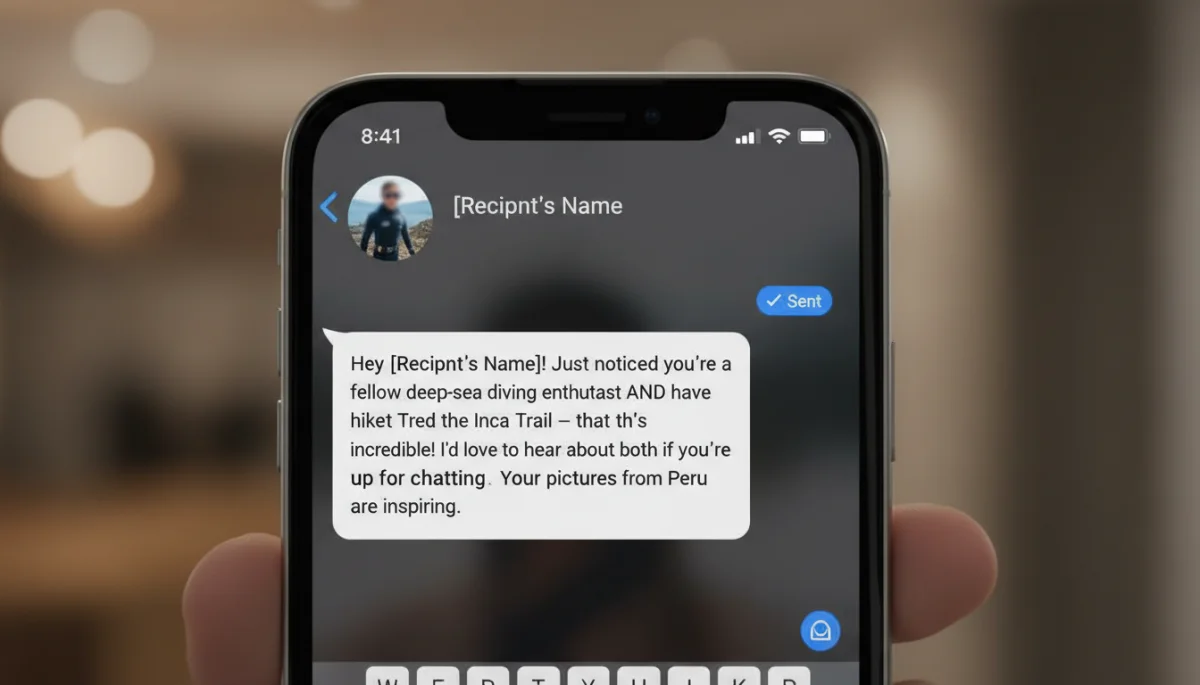
Avoid making assumptions or commenting solely on their appearance. While physical attraction is a component of dating, focusing only on looks in a first message can come across as superficial and may not encourage a deep conversation. Instead, weave in a compliment about their profile’s content or their apparent personality, based on what they’ve shared.
Ultimately, personalization transforms a cold outreach into a warm introduction. It communicates that you’re not just looking for ‘anyone,’ but that you’re specifically interested in them. This level of intentionality is a powerful catalyst for a higher reply rate and more meaningful interactions.
Crafting the perfect first message structure
A well-structured first message is like a good story: it has an engaging beginning, a compelling middle, and an open-ended conclusion that invites a response. While personalization is the cornerstone, the way you arrange your thoughts and present your message significantly impacts its effectiveness. There’s a subtle art to balancing brevity with enough substance to spark interest without overwhelming the recipient.
The goal is to create a message that is easy to read, intriguing, and clearly prompts a reply. A haphazard collection of thoughts, no matter how well-intentioned, can be confusing or simply ignored. By following a clear structure, you guide the recipient through your message, making it more likely they’ll engage with your prompt.
The three core components
Every effective first message typically contains three main elements:
- The Hook (Personalized Opener): This is where you reference something specific from their profile. It grabs their attention and shows you’ve paid attention.
- The Connection (Brief Statement of Interest): Briefly explain why that specific detail resonated with you, or share a small, relevant piece of information about yourself. This builds rapport.
- The Call to Action (Open-Ended Question): End with a question that encourages them to share more about themselves or their experiences, making it easy for them to reply.
For instance, if someone mentions their love for obscure indie films, your hook could be, ‘I saw you’re a fan of indie cinema – I’m always looking for hidden gems!’. Your connection could be, ‘Just watched ‘Past Lives’ and was blown away.’ Finally, your call to action: ‘Do you have any recent favorites you’d recommend?’ This structure is concise, personal, and provides a clear path for a response.
Remember to keep your message relatively short. While detailed personalization is good, an overly long message can be intimidating and time-consuming to read. Aim for 2-4 sentences that get straight to the point while still conveying warmth and genuine interest. A well-constructed message makes it effortless for the other person to engage.
The power of open-ended questions
The quality of your first message often hinges on the question you ask. An open-ended question is a conversational superpower because it cannot be answered with a simple ‘yes’ or ‘no.’ Instead, it encourages the recipient to elaborate, share their thoughts, and invest more into the conversation. This naturally leads to a more engaging and extended dialogue, which is precisely the aim of a successful first message.
Closed-ended questions, such as ‘Do you like to travel?’ or ‘Are you busy this weekend?’, often lead to dead ends. A ‘yes’ or ‘no’ response requires the other person to then come up with a new topic, placing the conversational burden entirely on them. This extra effort can be a deterrent, especially when they’re sifting through many messages.
Examples of effective open-ended questions
When formulating your question, link it directly to the personalized detail you’ve referenced in your hook. This creates a seamless flow and reinforces your genuine interest.
- Instead of: ‘Do you like dogs?’ Try: ‘Your dog looks adorable in your photo! What’s the funniest thing they’ve ever done?’
- Instead of: ‘Did you enjoy your trip to Italy?’ Try: ‘Your photos from Italy look incredible! What was the most unexpected thing you discovered there?’
- Instead of: ‘Do you play guitar?’ Try: ‘I saw you play guitar – what inspired you to pick up the instrument?’
The key is to ask a question that invites storytelling or reflection. People enjoy talking about themselves and their experiences, especially when prompted by genuine curiosity. By asking thoughtful, open-ended questions, you create an opportunity for them to share a piece of their world with you, fostering a deeper connection from the very beginning.
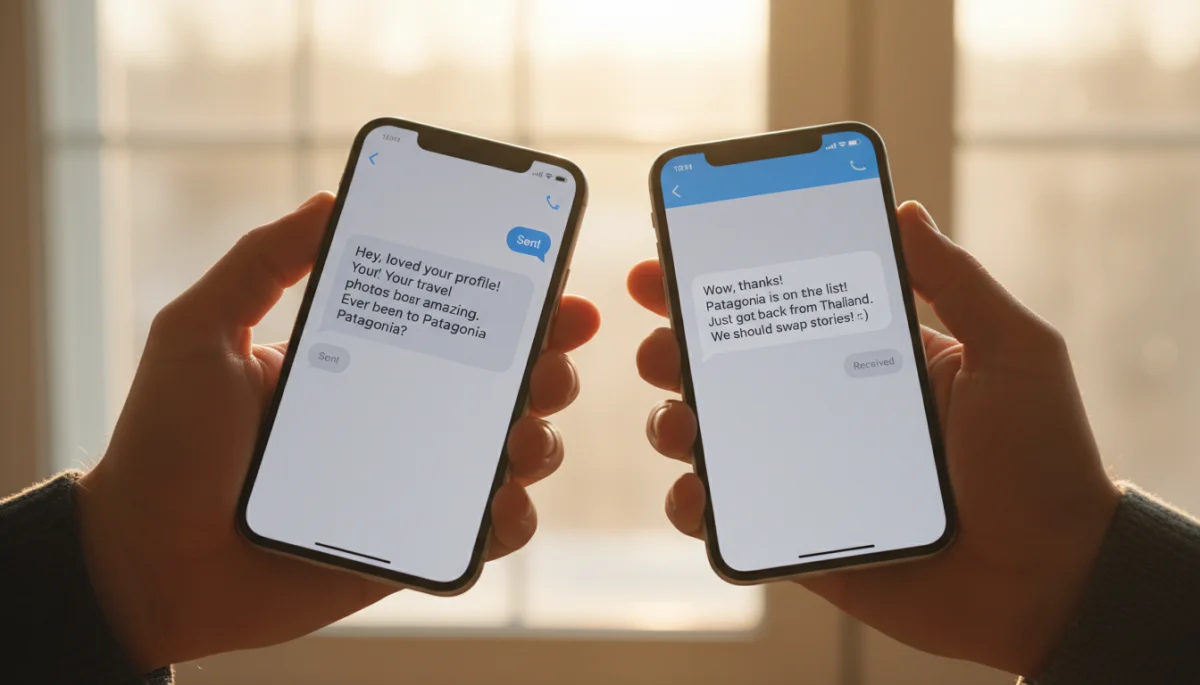
Furthermore, avoid overly personal or intrusive questions in your first message. Stick to topics that are easily discussed and shared publicly on their profile. The goal is to build initial rapport, not to delve into sensitive areas. A well-placed open-ended question makes it easy for them to reply and keep the conversation flowing naturally.
Timing and etiquette: when and how to send
Beyond the content of your message, the timing and your general approach to etiquette can subtly influence your reply rate. While there’s no magic formula, understanding the nuances of when and how to send your first message can give you a slight edge. It’s about being respectful, considerate, and aligning with the typical rhythms of online interaction.
Sending a message at an opportune time can mean the difference between it getting lost in a flood of notifications or being seen when the recipient is most likely to engage. Similarly, adhering to basic online etiquette ensures you present yourself as a thoughtful and desirable communicator.
Optimal sending times and respectful communication
While individual habits vary, general trends suggest certain times might be more effective. Evenings, particularly during weekdays after work hours (e.g., 7 PM – 10 PM), and Sunday afternoons tend to be popular times for people to check dating apps. These are periods when people are often winding down, relaxing, and more open to engaging in social interactions.
- Weekday evenings: People are often free from work commitments and looking for distraction.
- Sunday afternoons: A relaxed time, often spent planning for the week or casually browsing.
- Avoid late nights/early mornings: Messages sent at these times might seem impulsive or get buried by morning.
When it comes to etiquette, always be polite and avoid overly casual language or slang in your initial message. Maintain a respectful tone and proofread your message for typos and grammatical errors. A clean, well-written message reflects positively on you and shows attention to detail. If you receive a reply, aim to respond within a reasonable timeframe, ideally within 24 hours, to keep the momentum going. However, don’t feel pressured to reply instantly; a thoughtful response is better than a rushed one.
Remember, online dating is a marathon, not a sprint. Be patient, be genuine, and let your personality shine through your carefully crafted messages. Consistent, respectful communication builds a foundation for meaningful connections.
Common mistakes to avoid in your first message
Even with the best intentions, it’s easy to fall into common pitfalls when crafting your first message. Avoiding these mistakes is just as important as implementing effective strategies. Recognizing what not to do can significantly improve your chances of getting a reply and ensure you make a positive initial impression.
Many of these errors stem from a lack of personalization, an overemphasis on superficial aspects, or simply not thinking through the recipient’s perspective. By being mindful of these common missteps, you can refine your approach and present yourself in the best possible light.
Pitfalls that reduce reply rates
- Being overly generic: As discussed, messages like ‘Hi’ or ‘How are you?’ are easily ignored. They show no effort or genuine interest.
- Focusing solely on physical appearance: While attraction is important, making a first message solely about their looks can come across as superficial and may deter deeper conversation.
- Sending a novel/essay: Keep it concise. An overly long message can be daunting to read and might lead to the recipient simply skipping it.
- Using pickup lines: Most people find generic pickup lines cheesy, insincere, and often disrespectful. They rarely work.
- Being negative or complaining: Your first message should be positive and inviting. Avoid discussing past bad dating experiences or complaining about the app.
- Asking for personal information too soon: Requesting contact details or too much personal information in the first message can be off-putting and feel intrusive.
- Typos and grammatical errors: These can signal a lack of attention to detail or care, which can be a turn-off for many. Always proofread.
- Being overly aggressive or demanding: Messages that imply expectations or pressure for a response are counterproductive.
By consciously avoiding these common errors, you elevate the quality of your first message and increase its appeal. A thoughtful, respectful, and well-composed message that steers clear of these pitfalls is far more likely to receive a positive response and lead to a genuine connection.
From message to meaningful conversation
Sending the perfect first message is an achievement, but it’s just the first step. The ultimate goal is to transition from that initial contact into a meaningful conversation that can potentially lead to a real-world connection. This requires continued effort, genuine curiosity, and the ability to maintain engagement beyond the initial exchange. Think of the first message as opening a door; now you need to walk through it and explore the room.
Many promising interactions fizzle out after a few messages because the conversation lacks direction or depth. To prevent this, you need strategies to keep the dialogue flowing, uncover shared interests, and gradually build rapport that transcends the digital screen. The art of conversation is a skill that can be honed, and it’s essential for long-term dating success.
Sustaining the dialogue and building rapport
Once you receive a reply, acknowledge their response and then build upon it. If they answered your open-ended question, delve a little deeper into their answer. Ask follow-up questions that show you’re actively listening and interested in what they have to say. For example, if they shared a travel story, ask about their favorite part of the trip or what made that experience so memorable for them.
- Active Listening: Reference previous points in the conversation to show you’re engaged.
- Introduce New (but related) Topics: If a topic is winding down, gently pivot to a related interest from their profile or something you’ve discussed.
- Share a Bit About Yourself: While asking questions, also offer relevant insights or experiences from your own life to create a balanced exchange.
- Look for Common Ground: Actively seek out shared hobbies, values, or experiences that can form the basis of a deeper connection.
The transition from online chat to an in-person meeting should feel natural. After a few positive exchanges, if you feel a genuine connection developing, you can subtly suggest moving the conversation to a different platform or, when appropriate, propose a casual first date. This progression should not be rushed but rather emerge organically from a comfortable and engaging dialogue.
Ultimately, the journey from a well-crafted first message to a meaningful connection is about consistent, genuine engagement. By showing sustained interest, asking thoughtful questions, and being open to sharing about yourself, you can transform initial sparks into lasting flames.
| Key Strategy | Brief Description |
|---|---|
| Personalization | Reference specific details from their profile to show genuine interest. |
| Open-Ended Questions | Ask questions that invite detailed responses, not just ‘yes’ or ‘no’. |
| Concise & Clear | Keep messages brief (2-4 sentences) and free of errors. |
| Timing & Etiquette | Send messages during active times and maintain a respectful tone. |
Frequently asked questions about first messages
Your first message should ideally be concise, typically between 2 to 4 sentences. This length allows you to personalize your greeting and ask an open-ended question without overwhelming the recipient. Brevity ensures it’s easy to read and encourages a quicker response, rather than appearing like a lengthy essay.
Yes, humor can be very effective if used appropriately. If their profile suggests they appreciate humor, a lighthearted, witty remark can make your message memorable. However, ensure it’s not offensive or too obscure. A good rule is to keep it gentle and self-deprecating rather than critical of them or overly aggressive.
When faced with a sparse profile, focus on what little information is available, such as a photo’s background or a general interest implied by their age or location. You can also ask a broader, yet still open-ended question like, ‘What’s one thing you’re passionate about that most people wouldn’t guess?’
It’s generally best to avoid making appearance the sole focus of your first message. While a subtle, respectful compliment can be included, prioritize showing interest in their personality or shared interests. Over-focusing on looks can come across as superficial and may not lead to a deeper conversation, potentially lowering your reply rate.
There’s no fixed timeline for replies, as everyone’s usage patterns differ. Some might reply within minutes, while others take days. It’s best not to overthink it. Focus on sending a great message and then move on. If you don’t hear back within a few days, it’s usually best to take it as a sign to pursue other connections.
Conclusion
Mastering the art of crafting the perfect first message is an invaluable skill in the landscape of online dating. By prioritizing personalization, understanding the psychological impact of your words, and structuring your messages thoughtfully, you significantly increase your chances of receiving a reply. Remember to leverage open-ended questions, avoid common pitfalls, and approach each interaction with genuine curiosity. The goal is not just a reply, but the initiation of a meaningful conversation that could lead to a genuine connection. With these strategies, you are well-equipped to navigate dating apps with confidence and effectiveness, turning initial contacts into fulfilling relationships.
